
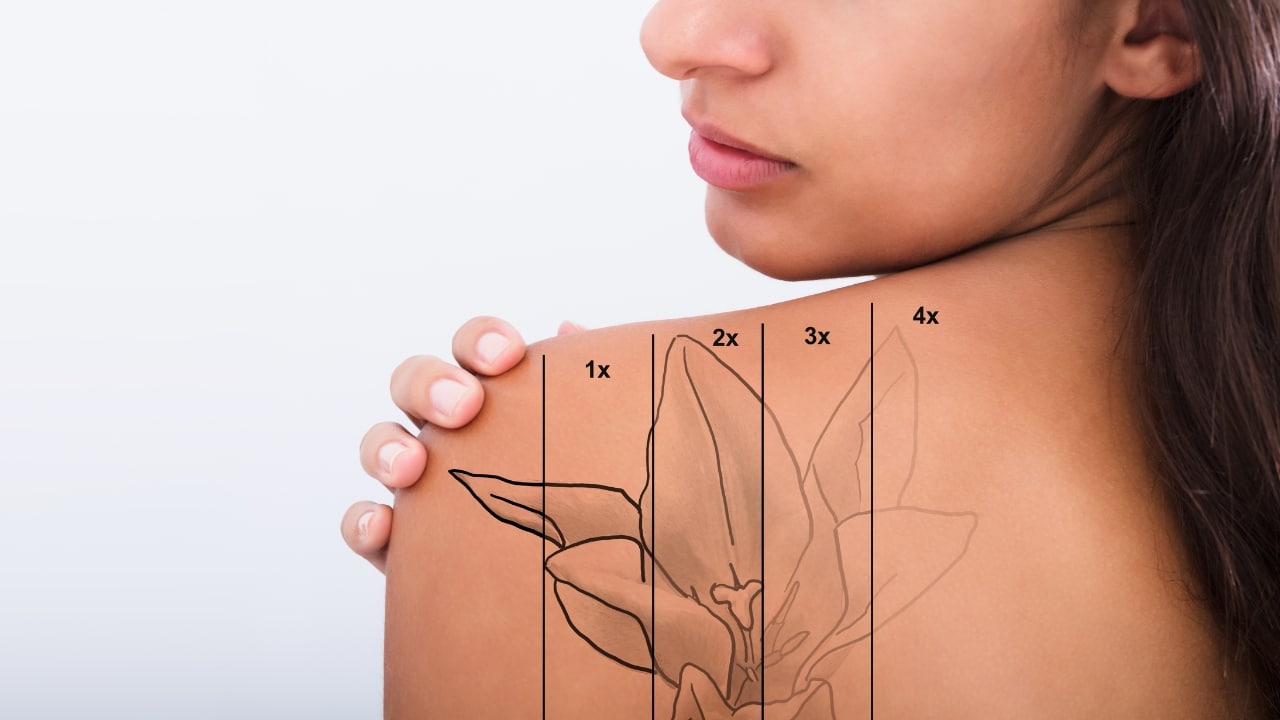
Tattoo Removal Results: How skin tone and ink colour affect fading is something that needs to be considered carefully when devising a treatment plan for tattoo removal.
It’s why two people can follow the same removal plan and still see totally different progress and end results. If skin tone and ink colour aren’t accounted for, it’s possible to set a treatment plan that’s ineffective causing pigmentation or permanent scarring.
The fix is a plan that’s built around your skin type and your tattoo’s colours, using specific wavelengths that correspond with targeting different colours of pigments. At Lazer Wizard, our certified technicians tailor treatments using the Quanta Q‑Plus C Evo and Zimmer Cryo cooling to minimise discomfort and reduce thermal stress during laser sessions, getting you more effective results with less pain.
What to Expect from Good Tattoo Removal Results
Good results mean your tattoo fades steadily over time. You’ll often see the most change between sessions, as your body clears ink fragments. Early on, fading can be patchy. Dense areas start to break apart, and outlines slowly soften. This is all normal progress.
Don’t expect a perfectly even fade after one session. There’s no universal timeline either. Your results depend on three things: Your skin type, the depth, colours, and age of your tattoo’s, and how your body responds to treatment. That’s why a personalised treatment plan matters.
How Your Skin Tone Affects Tattoo Removal
Your skin tone affects removal because both your tattoo and your skin contain pigment. The laser targets both.
Darker skin has more natural pigment (melanin) in it. Technicians need to adjust the laser settings to treat your tattoo effectively while protecting your skin and minimising the risk of unwanted lightening or darkening.
Only longer wavelength lasers should be used for darker skin tones since they are less absorbed by your skin’s melanin, which helps reduce side effects. Using short wavelengths to treat colours like red and orange on darker skin types can lead to hypopigmentation.
Skin Tone Changes: What to Know and How We Reduce Risk
Sometimes, the skin around your tattoo can temporarily lighten or darken after treatment. You might hear two terms:
- Hyperpigmentation: A reaction causing your body to overproduce melanin in the area being treated. (Possible to correct)
- Hypopigmentation:. A reaction causing a loss of melanin in the area being treated, leaving a white patch. (Very hard, sometimes impossible to correct)
These changes don’t happen to everyone, but they’re possible. The risk is higher if your skin is tanned before treatment or if the treatment is too aggressive for your skin type.
That’s why we tailor your laser settings, space out your sessions properly, and stress good aftercare. A practical rule: if your skin is tanned, wait until it returns to its normal shade before treating. Protecting your natural skin tone is part of getting the best tattoo removal results.
How Ink Colour Affects Fading
Ink colour matters because different pigments absorb different wavelengths of light. Modern tattoos can contain multiple pigments that behave differently under treatment. Removing multi-coloured tattoos often requires multiple wavelengths.
That’s why Lazer Wizard uses the Quanta Q‑Plus C Evo with three wavelengths so we can tailor treatment to both black and a wide range of colours.
Why Black Ink Usually Fades Faster
Black ink typically absorbs laser energy efficiently and is commonly treated with 1064 nm, which also penetrates more deeply than shorter wavelengths. Very dense, deep, or cover-up black tattoos can still be stubborn. But generally, black ink responds better than most colours.
If your tattoo is mostly black, progress often looks like solid areas breaking apart first, then overall lightening across later sessions.
Reds, Oranges, and Purples: What to Expect
Warm colours like red and orange are often approached with 532 nm. Many clients see strong fading with these colours, but results can vary depending on pigment blends and how densely the ink was packed.
If your tattoo includes both black and red, they may not fade evenly at the same rate because you’re effectively treating multiple pigments that respond differently.
Blues and Greens: The Slower Fade
Blue and green inks are often the most challenging to remove. They usually fade more gradually and need precise targeting. That’s where 694 nm (ruby) can be particularly effective for many blue and green pigments.
If you’ve been told your blue or green tattoo is hard to remove, it doesn’t mean you can’t get good results. It means your plan needs the right laser settings, realistic expectations, and consistent spacing.
For more details, visit our page on colour tattoo removal.
White, Pastel, and Skin-Tone Inks: Setting Realistic Expectations
Light inks like white, pastel, and skin-tone colours can be unpredictable. Sometimes they’re resistant to treatment. Other times, they might darken or change before they start to fade.
This is why a consultation is so important. Your plan should be based on how your ink behaves and how your skin heals, rather than assumptions.
Other Factors That Affect Your Tattoo Removal Results
Your skin tone and ink colour are important, but other factors also affect how quickly your tattoo fades.
- Professional vs. amateur tattoos: Professional ink is usually deeper and denser, which can mean more sessions.
- Tattoo age: Older tattoos sometimes fade easier because your body has already started breaking down the ink.
- Ink density and layering: Cover-ups and reworked tattoos often need more treatments.
- Body location: Areas closer to the heart with better blood flow tend to clear ink faster than areas like hands or feet.
- Your immune response: Your body clears the ink between sessions, so your overall healing and health matter.
To understand the full process, read how tattoo removal works.
How to Get Better Results Between Sessions
We control the laser settings, but you control what happens next. If your goal is the best possible results, focus on the fundamentals:
- Stick to sensible spacing. Many clients need 8–12 sessions, and we commonly recommend a minimum of 8 weeks between sessions to allow proper healing and ink clearance.
- Follow aftercare instructions. Better healing supports safer progress and reduces avoidable complications.
- Keep the treated area out of the sun. This is one of the biggest preventable causes of pigment issues and delayed treatment.
- Support your immune system. Sleep, hydration, and steady routines help your body clear ink between sessions.
- Be patient. Faster or more aggressive treatment isn’t always better. Steady, healthy progress is the goal.
After every session, follow our complete tattoo removal aftercare guide.
Why Lazer Wizard Offers Personalised, Comfortable Treatment
Lazer Wizard offers personalised, comfortable treatment backed by deep expertise. Our team is fully certified with nine years of experience. We build your treatment plan around your specific skin tone, ink colours, and goals.
Here’s how we put that into practice:
- Quanta Q‑Plus C Evo (1064/532/694 nm): Three wavelengths so we can target black and a wide range of colours with a tailored approach.
- Zimmer Cryo cooling: Supports comfort during treatment and helps keep skin calmer.
- Tailored Treatment Plans: Especially important for darker skin tones or multi-colour work where safety and precision matter most.
See real-world examples on our tattoo removal results page.
Your Tattoo Removal Consultation: What to Expect
Your consultation is where we determine what’s realistic for your tattoo removal. You’ll leave with a clear understanding of your personal plan. Here’s what we’ll do together:
- Look at your tattoo’s colours, density, and placement.
- Discuss your skin tone, lifestyle factors, and any relevant health considerations.
- Map a plan for the likely session range and recommended spacing.
- Walk you through comfort, aftercare, and how to track progress.
Get a Realistic Estimate for Your Tattoo Removal
Wondering how your tattoo will fade or if your skin and ink colours are suitable? The fastest way to get a clear answer is with a consultation. Book a consultation with Lazer Wizard, and we’ll create a personalised plan based on your specific ink, your skin tone, and your goals.